Cypress trees, also known as Jhau or Thuja, are popular evergreen plants valued for their graceful appearance, rich green foliage, and ability to thrive in various climates. They are often used as privacy screens, hedges, or decorative plants in landscapes. If you’re looking to expand your collection of these beautiful trees, propagating them from cuttings is an easy and highly effective method.
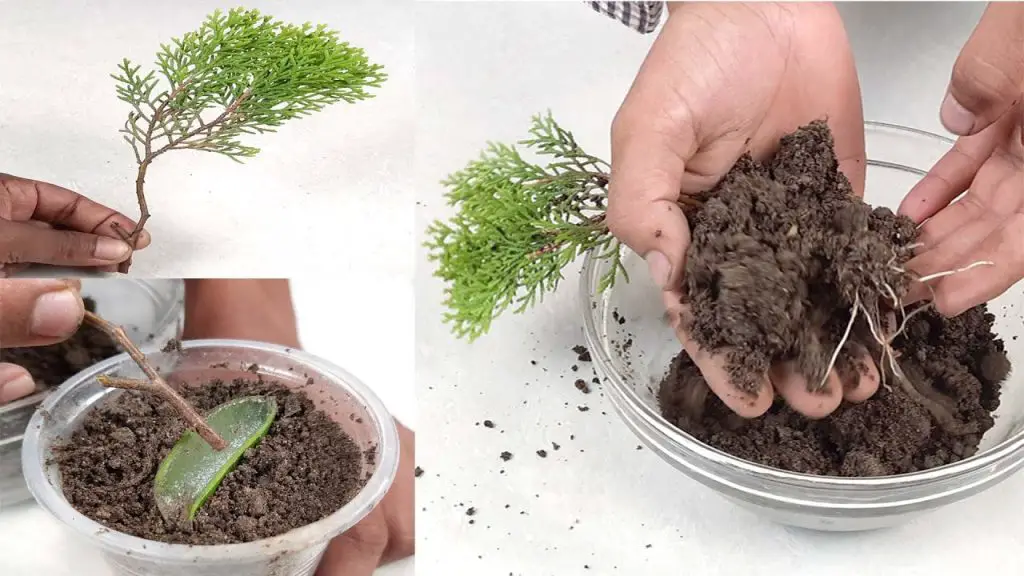
In this guide, we will show you how to propagate Cypress/Thuja plants at home using a simple method with Aloe Vera, ensuring a high success rate and fast rooting.
Why Use Aloe Vera for Propagating Cypress?
- Natural Rooting Hormone: Aloe Vera contains natural compounds that promote root growth, making it an excellent, organic rooting agent for your cuttings.
- Healing Properties: Aloe Vera also helps heal wounds on plant cuttings, reducing the chances of infection and improving rooting success.
- Easy to Access: Aloe Vera is widely available and easy to use, making it a convenient choice for gardeners.
Step-by-Step Guide to Propagate Cypress (Jhau/Thuja) Plant from Cuttings Using Aloe Vera
1. Choose the Right Cutting
- Start by selecting a healthy Cypress/Thuja tree with strong, vibrant foliage.
- Choose semi-woody or softwood branches (young but not too soft) from the tree. The ideal cutting should be 4 to 6 inches (10-15 cm) long.
- Ensure that the cutting is free from any disease or pests.
2. Prepare the Cutting
- Using a sharp, sterilized knife or pruning shears, make a clean cut just below a node (the point where the leaves grow).
- Remove any leaves or branches from the bottom half of the cutting to expose the stem. Keep a few leaves at the top to help the cutting absorb sunlight and nutrients.
- Trim the bottom of the cutting slightly to encourage better rooting.
3. Prepare Aloe Vera Gel
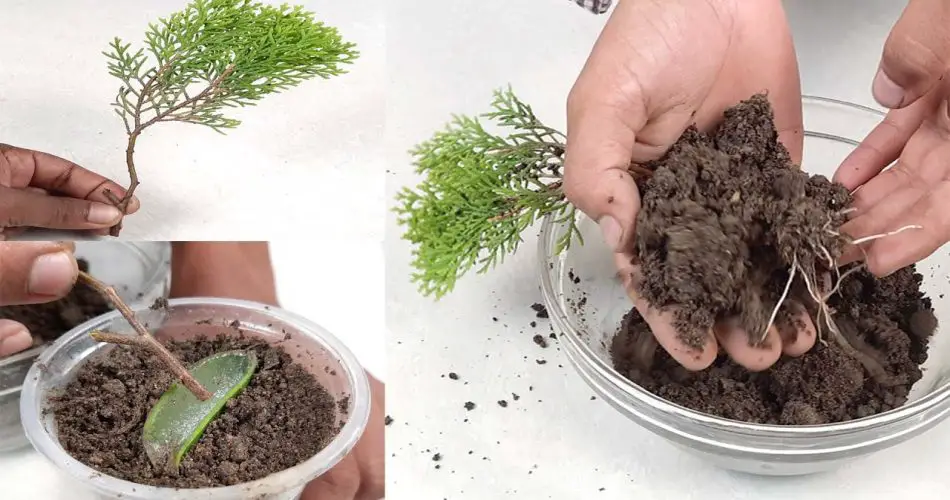
- Cut a fresh Aloe Vera leaf and extract the gel. The gel contains natural hormones that will help the cutting root faster.
- Scoop out the gel and place it in a small bowl. If you don’t have an Aloe Vera plant, you can also buy Aloe Vera gel from a store (ensure it’s pure and free from additives).
4. Dip the Cutting in Aloe Vera Gel
- Dip the cut end of the Cypress cutting into the Aloe Vera gel. Coat the end thoroughly with the gel, making sure it covers the entire cut portion.
- Aloe Vera acts as a natural rooting hormone that stimulates root growth and prevents infection during the rooting process.
5. Plant the Cutting in Soil
- Fill a small pot with well-draining potting mix. A mix of perlite, sand, and peat moss is ideal for rooting cuttings.
- Make a small hole in the soil using a stick or your finger, then gently place the cutting into the hole. Firm the soil around the base to hold the cutting upright and ensure good contact with the soil.
6. Create a Humid Environment
- Water the cutting lightly, ensuring the soil stays moist but not soaked.
- To create a high humidity environment, cover the pot with a plastic bag or use a clear plastic dome. This helps retain moisture and increases the chances of successful rooting.
- Ensure there is some airflow to prevent mold growth by leaving small gaps in the plastic cover.
7. Provide the Right Conditions
- Place the pot in a bright location with indirect sunlight. Avoid direct sunlight, as it can dry out the cutting or cause it to overheat.
- Maintain a warm temperature around 65°F to 75°F (18°C to 24°C), which is ideal for rooting.
- Keep the soil consistently moist but ensure it is not waterlogged, as too much water can lead to root rot.
8. Monitor the Progress
- Check the cutting regularly for signs of rooting. After about 3 to 4 weeks, gently tug on the cutting. If you feel resistance, it indicates that roots have formed.
- Once the cutting has developed a strong root system, it can be transplanted into a larger pot or directly into the garden.
9. Transplant the Rooted Cutting
- After successful rooting, carefully remove the cutting from the pot and plant it in its permanent location.
- Choose a spot with full sun and well-draining soil to allow the plant to continue growing.
- Water regularly, but ensure that the soil is allowed to dry out slightly between waterings.
Additional Tips for Success:
- Use Fresh Aloe Vera: Always use fresh Aloe Vera gel, as it contains more active rooting compounds.
- Don’t Overwater: Keep the soil moist, but avoid waterlogging, as it can cause the cutting to rot.
- Be Patient: Rooting can take anywhere from 3 to 6 weeks, depending on environmental conditions and the cutting’s health.
- Avoid Fertilizer: For the first few weeks, avoid fertilizing the cutting, as it may cause stress. Wait until the roots are well-established before applying any fertilizer.
Conclusion
Propagating Cypress (Jhau/Thuja) plants from cuttings is a rewarding and simple method, and when combined with Aloe Vera, you significantly increase your chances of success. Aloe Vera serves as a natural rooting hormone that stimulates growth, promotes healing, and ensures healthier plants. By following the steps outlined in this guide, you can easily grow a new Cypress tree at home with minimal effort and maximum success.
Whether you want to create a privacy hedge, add a decorative tree to your landscape, or share your plants with friends and family, this propagation method will help you grow strong, healthy Cypress/Thuja plants. Happy gardening!