Growing a mango plant from a cutting is an exciting and rewarding way to propagate this tropical fruit tree. With a little patience and the right technique, you can create a healthy mango plant right at home. One interesting method to help improve the success rate of growing a mango plant from a cutting is by using Aloe Vera Gel. Aloe Vera has natural rooting and healing properties that can promote healthy root development and encourage the cutting to thrive.

In this article, we’ll guide you through the process of growing a mango plant from a cutting using Aloe Vera Gel as a rooting agent.
Why Use Aloe Vera Gel for Mango Cuttings?
Aloe Vera is well known for its healing properties and benefits to plants. The gel from Aloe Vera leaves contains natural enzymes, antioxidants, and growth hormones that can stimulate rooting and promote healthy growth. When applied to mango cuttings, Aloe Vera helps prevent diseases and infections, while providing the cutting with the necessary nutrients to take root.
Step-by-Step Guide to Growing Mango Plant from Cutting Using Aloe Vera Gel
1. Choose the Right Mango Cutting
The first step is to select a healthy mango tree from which you will take the cutting.
- Choose a healthy branch: Look for a healthy branch that is about 6-8 inches long and has at least two nodes (the spots where leaves are attached).
- Mature branches: Select a mature branch that is not too young or too old, as these are more likely to root successfully.
2. Prepare the Cutting
Once you’ve chosen the cutting, it’s time to prepare it:
- Cut the branch: Using a sharp, clean knife, cut the selected branch at a 45-degree angle just below a node.
- Remove excess leaves: Strip off most of the leaves, leaving only a couple of leaves near the top of the cutting. This helps reduce water loss and focuses the plant’s energy on root development.
- Clean the cutting: Make sure the cutting is free from any dirt, debris, or pests.
3. Prepare the Aloe Vera Gel
Aloe Vera gel is a natural and effective rooting agent. Here’s how to prepare it:
- Harvest Aloe Vera gel: Cut a mature Aloe Vera leaf and scoop out the gel from the center. You can also buy Aloe Vera gel from the store, but using fresh gel is more effective.
- Prepare the gel: Cut the gel into small pieces or mash it into a smooth paste. The gel will be used to coat the base of the mango cutting.
4. Apply Aloe Vera Gel to the Cutting
Now it’s time to treat the cutting with Aloe Vera gel:
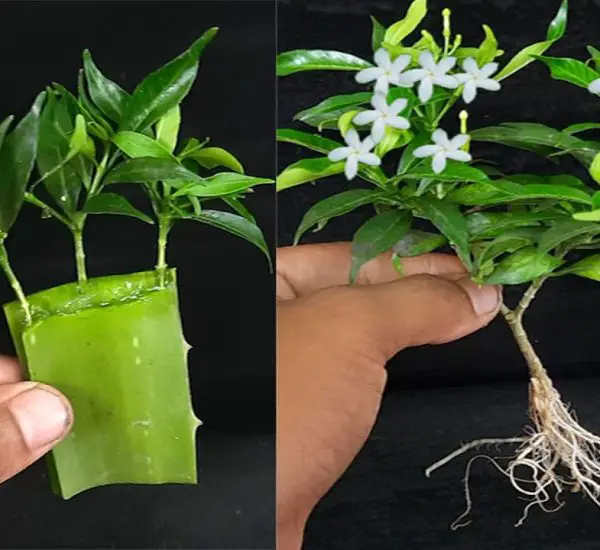
- Dip the cutting: Gently dip the cut end of the mango cutting into the Aloe Vera gel. Ensure the gel completely covers the base of the cutting where the roots will form. The Aloe Vera gel will help the cutting heal and stimulate root growth.
- Leave the cutting for a few minutes: Allow the cutting to rest for 5-10 minutes so the gel can settle and adhere to the cutting.
5. Plant the Mango Cutting
After applying the Aloe Vera gel, it’s time to plant the mango cutting:
- Prepare the pot or soil: Fill a small pot with well-draining soil, such as a mix of potting soil and perlite. Mango trees require excellent drainage to prevent root rot.
- Plant the cutting: Make a small hole in the soil and insert the Aloe Vera-treated end of the cutting into the hole. Gently press the soil around the cutting to secure it.
- Water the cutting: Lightly water the soil to help settle the cutting. Keep the soil moist but not soggy.
6. Create a Humid Environment
Mango cuttings require a humid environment to encourage root growth. To create the ideal conditions:
- Cover with a plastic bag: Place a clear plastic bag or a plastic dome over the cutting to maintain humidity. Ensure the bag doesn’t touch the cutting by using sticks or small supports to keep it elevated.
- Place in indirect light: Keep the cutting in a spot that receives indirect sunlight. Avoid direct sunlight, as it may cause the cutting to dry out too quickly.
7. Monitor and Care for the Cutting
- Check regularly: Open the plastic bag occasionally to check for mold or rot. If you notice any mold, remove the plastic and allow the cutting to air out for a few hours before re-covering it.
- Watering: Ensure the soil stays slightly moist but not waterlogged. Too much water can lead to root rot.
- Wait for roots: It may take several weeks for roots to develop. Be patient and continue to monitor the cutting.
Transplanting the Mango Plant
Once the mango cutting has developed strong roots (after about 4-8 weeks), you can transplant it into a larger pot or directly into the ground.
- Check for roots: Gently tug on the cutting to see if there is resistance, indicating that the roots have formed.
- Transplant: When the roots are established, transplant the mango plant into well-draining soil with plenty of sunlight. Continue to care for the plant by watering regularly and providing adequate light.
Tips for Success
- Use fresh Aloe Vera gel: Fresh Aloe Vera gel is more effective than store-bought gel.
- Humidity is key: Mango cuttings need humidity to root, so use a plastic bag or humidity dome to create a greenhouse effect.
- Patience: Rooting can take time, so be patient and avoid disturbing the cutting too often.
- Avoid overwatering: Overwatering can cause the cutting to rot. Ensure proper drainage.
Conclusion
Growing a mango plant from a cutting using Aloe Vera gel is a simple and natural method that increases your chances of success. Aloe Vera provides the cutting with the essential nutrients to heal and root, ensuring a healthy and thriving mango plant. With a little care, you can grow your own mango tree at home and enjoy the beauty and benefits of this tropical fruit tree. 🌱🌳