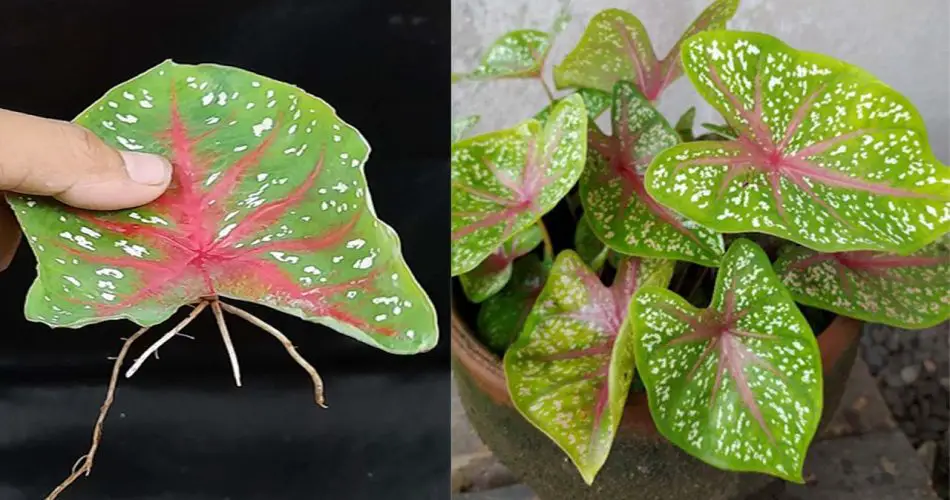
Caladium bicolor, commonly known as angel wings or painted caladium, is a stunning ornamental plant admired for its vibrant, colorful leaves. With their striking shades of pink, red, white, and green, these plants can add a touch of elegance and charm to any garden or indoor space. One of the easiest ways to propagate this beauty is through its leaves, and the best part? You can do it simply by using water! Let’s explore how you can propagate Caladium bicolor successfully and grow new plants from just a leaf.
Why Propagate Caladium Bicolor with Leaves?
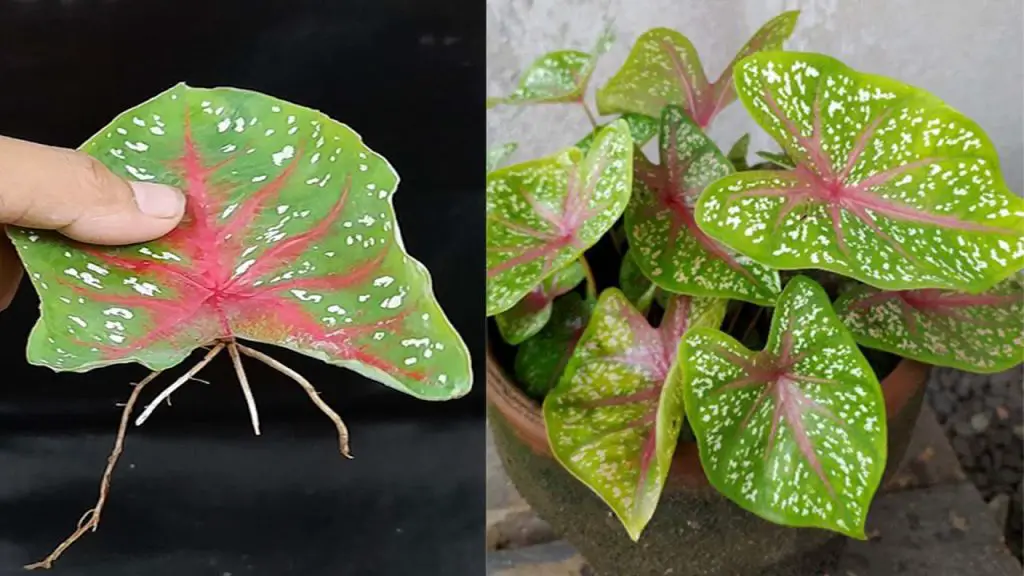
Propagating Caladium bicolor by leaf cutting in water is an effective and easy method that allows you to grow new plants without the need for complex techniques. The process is straightforward and beginner-friendly, making it a perfect option for those new to plant propagation. Here’s why this method works so well:
- No Soil Needed: You can start the propagation process without needing soil, making it perfect for people who don’t have a garden space.
- Faster Root Development: Water propagation encourages roots to form quickly, and you can watch the plant’s progress over time.
- Easy to Monitor: Since the cuttings are in water, you can easily see when the roots are developing and know exactly when to transfer them to a new pot.
Steps to Propagate Caladium Bicolor from Leaves in Water
Follow these simple steps to successfully propagate your Caladium bicolor using just its leaves and water:
1. Select a Healthy Leaf
Choose a healthy, mature leaf from your Caladium bicolor plant. Make sure the leaf is free from any diseases or damage. It’s important to use a leaf with vibrant colors and no signs of yellowing or wilting. Ideally, select a leaf that is not too old or too young, as it will have the best chance of developing roots.
2. Cut the Leaf
Using a sterilized pair of scissors or pruning shears, carefully cut the leaf from the stem, ensuring to leave a small portion of the leaf stalk (petiole). You can either cut the leaf into smaller pieces, each containing a portion of the main vein, or leave the entire leaf intact for propagation.
3. Prepare a Water Container
Fill a glass jar or any clear container with clean water. The container should be large enough to hold the leaf cutting while keeping the cut surface submerged. It’s important to make sure the water is clean and free from any contaminants. You can use tap water, but distilled water or rainwater would be ideal for ensuring the best growth.
4. Place the Leaf in Water
Place the cutting or the leaf stalk in the water, making sure that the cut end is fully submerged. The leaf should not be floating or touching the sides of the container, as this could prevent the cutting from rooting properly. You can use a small stick or support to keep the leaf in place if necessary.
5. Change the Water Regularly
To prevent the growth of bacteria or algae, change the water in the container every few days. Fresh water helps to maintain a clean environment for the cutting, encouraging faster root growth.
6. Wait for Roots to Develop
Over the next few weeks, you should start to see roots begin to form at the base of the cutting. The process may take a few weeks, depending on the conditions. During this time, keep the container in a bright location, but out of direct sunlight. The ideal temperature for rooting is between 70°F and 80°F (21°C – 27°C).
7. Transplant the Cutting
Once the cutting has developed a strong root system, it’s time to transplant it into soil. Prepare a pot with well-draining soil, and carefully transfer the rooted cutting into the pot. Water it well and continue to care for your new Caladium bicolor plant as usual.
Additional Tips for Success
- Keep the Leaf in a Humid Environment: If you live in a dry area, consider placing the container in a humidity tray or covering it with a plastic dome to retain moisture around the cutting.
- Use Rooting Hormone: Although it’s not necessary, using a rooting hormone on the cut end of the leaf can encourage faster root development.
- Be Patient: Rooting can take several weeks, so be patient and allow the cutting time to grow roots.
- Keep the Leaf Healthy: Regularly inspect the cutting for any signs of rot or disease. If the leaf starts to turn yellow or become mushy, remove it from the water and start again with a fresh cutting.
Conclusion
Propagating Caladium bicolor using leaf cuttings in water is a simple and effective method that anyone can try. With a little time and care, you can create new, healthy plants to add to your collection or share with friends and family. By following these simple steps, you’ll soon have vibrant Caladium plants to brighten your home or garden. Happy gardening! 🌱🌸