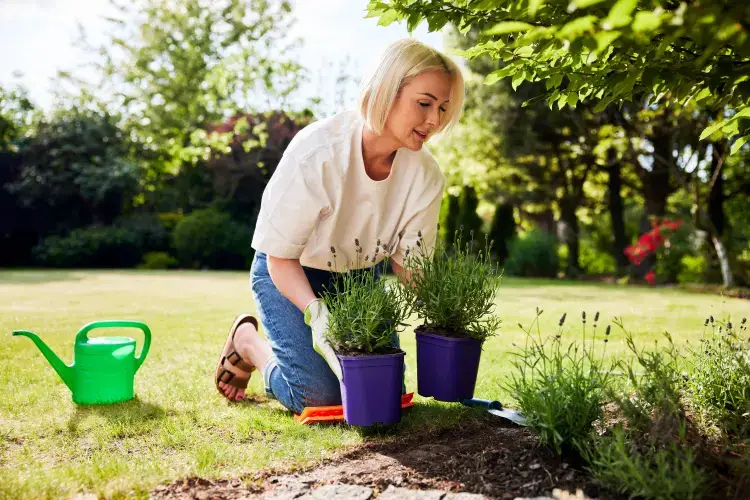
Lavender, known for its beauty and aromatic allure, is a versatile addition to any garden, thriving in pots, planters, or directly in the ground. Its resilience to drought and heat makes it ideal for both novice and experienced gardeners alike. To maximize its benefits and visual appeal, consider these companion plants.
What to Plant Next to Lavender?
What Flower with Lavender?
Lavender pairs beautifully with several flowers that share its need for full sun and well-drained soil:
- Echinacea: Known for its vibrant blooms, echinacea complements lavender’s colors and growing conditions.
- Roses: A classic combination, roses and lavender thrive together with adequate spacing to accommodate their differing water needs.
- African Daisy: These low-maintenance flowers add color and longevity to your garden alongside lavender.
What to Plant Next to Lavender as a Vegetable in the Garden?
Lavender isn’t just for flowers—it’s beneficial in the vegetable garden too, helping to deter pests while attracting pollinators:
- Eggplants: Lavender’s essential oils repel eggplant pests while encouraging pollinators for better harvests.
- Tomatoes: Planting lavender near tomatoes deters whiteflies and spider mites, benefiting both plants’ growth.
- Peppers: Like tomatoes, peppers benefit from lavender’s pest-repelling properties and increased pollination.
Which Grasses Should Be Associated with Lavender?
For a garden rich in texture and contrast, consider pairing lavender with ornamental grasses that share its preferences:
- Satin Tison: This perennial grass offers striking red, orange, and yellow flowers, contrasting beautifully with lavender.
- Blue Fescue: Known for its silvery-blue foliage, blue fescue complements lavender’s color palette while adding texture.
- Fountain Grass and Maiden Grass: Both varieties thrive in dry soil and full sun, enhancing your garden’s visual appeal alongside lavender.
By selecting these companion plants, you can create a harmonious and visually stunning garden that maximizes the benefits of lavender throughout the growing season.