Using natural fertilizers is an excellent way to feed your plants and promote healthy growth without relying on chemical products. One of the easiest and most effective homemade fertilizers comes from the water you use to rinse dal or pink lentils. This simple and eco-friendly solution is packed with nutrients that can significantly benefit your plants. In this guide, we’ll explain how you can make and use lentil water as a fertilizer for your plants.
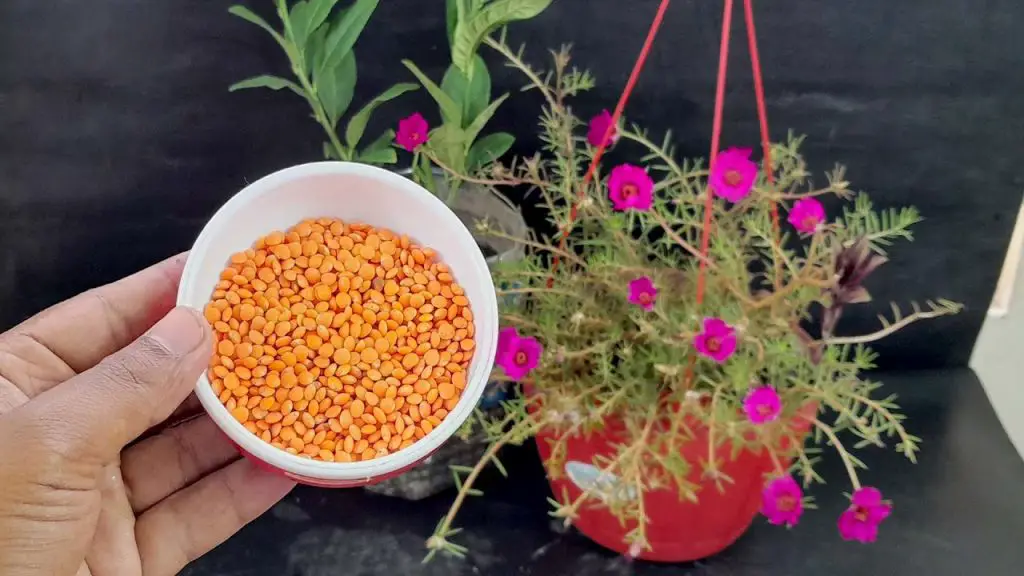
Why Use Dal/Pink Lentil Water as a Fertilizer?
Dal or pink lentils are rich in nutrients that are beneficial to plant growth. They contain high amounts of nitrogen, phosphorus, and potassium, all of which are essential for healthy plant development. The water you use to wash lentils holds these nutrients, which are easily absorbed by the soil when used as a fertilizer.
Benefits of Using Dal/Pink Lentil Water:
- Rich in Nitrogen: Promotes lush green growth in plants.
- Phosphorus: Encourages strong root development.
- Potassium: Helps improve overall plant health and resistance to disease.
- Natural and Eco-friendly: It’s a sustainable alternative to chemical fertilizers.
How to Make Natural Fertilizer from Dal/Pink Lentil Water
Step 1: Rinse the Lentils
- Take about 1 cup of dal (pink lentils) and rinse them thoroughly with water.
- The goal is to remove any dirt, dust, or residue from the lentils.
Step 2: Soak the Lentils (Optional)
- If you have extra time, you can soak the lentils in water for about 2-4 hours before rinsing them. This helps to release even more nutrients into the water.
Step 3: Collect the Lentil Water
- After rinsing (or soaking), collect the water in a container. This water is rich in nutrients and is ready to use as fertilizer.
Step 4: Dilute the Lentil Water (Optional)
- While dal water is nutrient-dense, it’s a good idea to dilute it with plain water if you’re using it for delicate plants.
- For most plants, a 1:1 ratio (equal parts lentil water and regular water) is ideal. However, for established or hardy plants, you can use it undiluted.
How to Use Dal/Pink Lentil Water on Plants
Step 1: Water the Plants
- Pour the lentil water around the base of the plants. Be sure to water the soil, not the leaves, to prevent mold or disease.
- For potted plants, gently pour the lentil water until it drains out from the bottom. For garden plants, you can simply pour it directly onto the soil around the roots.
Step 2: Frequency of Use
- Use lentil water about once a week to provide a steady supply of nutrients. If your plants are particularly nutrient-hungry, you can increase the frequency to twice a week, especially during the growing season.
- Always monitor the plant’s response, as some may prefer a little less or more frequent watering with lentil water.
Which Plants Benefit from Lentil Water Fertilizer?
Dal water can be used on most indoor and outdoor plants, including:
- Flowering plants (roses, hibiscus, marigolds)
- Vegetables (tomatoes, beans, peas)
- Herbs (basil, mint, parsley)
- Houseplants (snake plant, pothos, peace lily)
- Fruit plants (strawberries, citrus trees, apples)
Tips for Best Results
- Use Fresh Lentil Water: Always use fresh lentil water for the best nutrient content. If left standing for too long, the water can lose its effectiveness.
- Avoid Overwatering: While lentil water is rich in nutrients, too much water can lead to root rot. Ensure the soil has proper drainage and don’t over-water your plants.
- Combine with Other Organic Fertilizers: You can combine lentil water with other natural fertilizers, like banana peel water or egg shell tea, to provide a more balanced nutrient mix.
Conclusion
Using dal/pink lentil water as a natural fertilizer is a simple, effective, and eco-friendly way to nourish your plants. Packed with essential nutrients like nitrogen, phosphorus, and potassium, this homemade fertilizer promotes healthy growth, strong roots, and vibrant flowers. Whether you’re growing vegetables, flowers, or houseplants, lentil water is an excellent choice for providing your plants with the nutrients they need to thrive.
So, next time you cook dal, don’t throw away the water! Instead, use it to give your plants a healthy, natural boost! 🌱🌸