Growing a lemon tree from cuttings is a rewarding and simple way to propagate your favorite citrus tree at home. While starting from seed can take years to produce fruit, taking lemon tree cuttings is a faster way to get a new tree that is genetically identical to the parent. In this guide, we’ll show you the perfect method to grow lemon trees from cuttings with 100% success!

Why Propagate Lemon Trees from Cuttings?
Here are some reasons why propagating a lemon tree from cuttings is a great idea:
- Faster Results: Growing a lemon tree from seed can take years to mature and produce fruit, while a tree grown from a cutting will typically produce fruit in as little as 2-3 years.
- Consistency: Lemon tree cuttings produce genetically identical plants to the parent tree. This means you get the same flavor, quality, and characteristics as the original lemon tree.
- Ease: The process of taking and rooting lemon tree cuttings is easy and can be done with minimal equipment. You don’t need to be an expert gardener to have success!
Materials Needed to Propagate Lemon Tree Cuttings
To propagate lemon trees from cuttings, you’ll need the following materials:
- Healthy Lemon Tree: A mature, healthy lemon tree (either a lemon tree you already have or a friend’s tree). The tree should not show any signs of disease or pests.
- Pruning Shears: Sharp, clean pruning shears or scissors to take cuttings.
- Rooting Hormone: A powdered or liquid rooting hormone to encourage root development. While not absolutely necessary, it significantly increases success rates.
- Small Pot or Container: A small container filled with a well-draining potting mix (such as a mix of perlite, vermiculite, and peat moss or a cactus/succulent mix).
- Plastic Bag or Cloche: A plastic bag or a small clear plastic dome to create a humid environment around the cutting.
- Water: Clean, room temperature water for soaking the cutting and watering the potting mix.
Step-by-Step Guide to Growing Lemon Trees from Cuttings
Follow these steps to propagate your lemon tree cuttings with 100% success:
Step 1: Select a Healthy Cutting
- Choose a Healthy Parent Tree: Choose a healthy lemon tree to take cuttings from. The tree should be at least 2 years old, with no signs of disease or pests.
- Take Semi-Hardwood Cuttings: The best time to take lemon tree cuttings is in late spring or early summer when the tree is actively growing. Select a semi-hardwood stem (a mature but still flexible stem) that is about 6-8 inches long. Avoid cutting soft, green growth or old, woody stems.
- How to Cut: Cut just below a leaf node (where leaves emerge from the stem) using sharp, clean pruning shears. Make sure the cutting has at least 2-3 leaves at the top.
Step 2: Prepare the Cutting
- Remove Lower Leaves: Carefully strip off the lower leaves of the cutting, leaving a couple of leaves at the top. This exposes the stem where the roots will form.
- Optional: Use Rooting Hormone: To encourage rooting, dip the cut end of the stem into rooting hormone. This is optional, but it can help improve your success rate by stimulating root growth.
Step 3: Plant the Cutting
- Prepare the Pot: Fill a small pot with a well-draining potting mix. You can use a mix of perlite, cactus mix, or peat moss. The key is to use a light, airy mix that will drain quickly to prevent root rot.
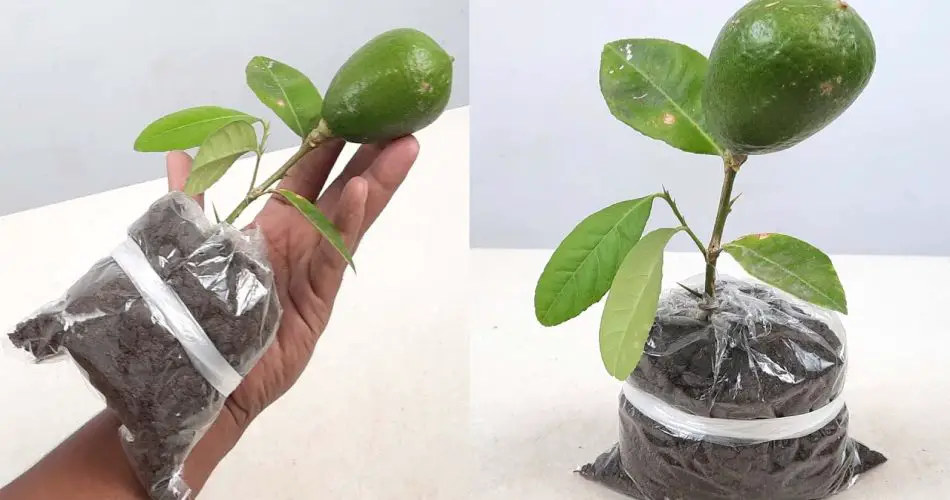
- Plant the Cutting: Insert the cut end of the stem about 2-3 inches deep into the soil. Gently press the soil around the cutting to secure it in place.
Step 4: Create a Humid Environment
- Cover the Cutting: To maintain high humidity and encourage rooting, cover the pot with a plastic bag or a clear plastic dome. This will trap moisture and create a mini greenhouse effect.
- Tip: Make sure the plastic does not touch the cutting. You can use small sticks or skewers to hold the plastic above the cutting.
- Place in Indirect Light: Place the pot in a location with bright, indirect sunlight. Avoid direct sunlight, which could overheat and dry out the cutting.
Step 5: Keep the Cutting Moist and Warm
- Watering: Keep the soil moist but not waterlogged. Check regularly to ensure the soil stays damp, but not too soggy. Mist the cutting lightly with water if it starts to dry out.
- Temperature: Lemon tree cuttings root best in warm temperatures (between 70°F-85°F or 21°C-29°C). Avoid placing the cutting in a cold spot, as this will delay rooting.
- Air Circulation: While humidity is important, the cutting also needs some air circulation. To prevent mold or fungus, make sure the plastic cover is not completely sealed. Allow a little airflow to keep the environment fresh.
Step 6: Monitor for Root Growth
- Check for Roots: After about 2-4 weeks, check the cutting for signs of root development. Gently tug on the cutting to see if you feel resistance. If the cutting resists, that means roots are starting to form.
- Remove the Cover: Once the cutting has developed a strong root system, you can remove the plastic cover. Gradually acclimate the cutting to normal air conditions by removing the cover for short periods and eventually completely removing it.
Step 7: Transplant the Cutting
- Transplant to Larger Pot: Once the cutting has established a strong root system, transplant it into a larger pot with regular potting soil. Be sure to handle the roots gently to avoid damage.
- Water and Fertilize: Water the newly potted plant well and begin to fertilize with a balanced, liquid fertilizer every 4-6 weeks to encourage healthy growth.
Care Tips for Success
- Light: Once the cutting is rooted and growing, place it in a location with full sunlight or under grow lights if indoors. Lemon trees need 8-12 hours of sunlight a day to grow and thrive.
- Watering: Water the tree regularly, but ensure that the soil drains well to prevent root rot. Let the top of the soil dry out between waterings.
- Temperature: Lemon trees prefer warm temperatures and should be kept at 60°F-85°F (15°C-29°C). If growing indoors, ensure that the temperature doesn’t drop below 50°F (10°C), as lemons are sensitive to cold.
- Fertilizing: After the cutting has grown into a small tree, use a high-nitrogen fertilizer to encourage healthy leaf growth and a balanced fertilizer once the tree is established.
Troubleshooting Tips for Lemon Tree Cuttings
- Yellowing Leaves: If the leaves turn yellow or droop, it could be a sign of overwatering or root rot. Ensure the soil is draining well, and reduce watering.
- Wilting Cutting: If the cutting wilts despite having high humidity, it may be due to poor air circulation or the cutting was taken from a weak part of the plant. Ensure proper airflow and remove any mold or fungus promptly.
- No Roots: If no roots have appeared after 4-6 weeks, try dipping the cutting in rooting hormone and replanting in fresh, moist soil. In some cases, it may take longer for roots to develop.
Conclusion
With these simple steps, you can propagate your lemon tree from cuttings with 100% success! By following this method, you’ll have a new lemon tree that is genetically identical to your parent plant, and it will be ready to produce fruit in just a couple of years.
Whether you’re adding another tree to your garden or gifting a lemon tree to a friend, propagating lemon trees from cuttings is a fun and rewarding process. By giving the cuttings the right environment and care, you’ll soon have a healthy, thriving tree ready to bear delicious lemons!
Happy gardening, and enjoy the fresh fruits of your labor! 🍋🌱