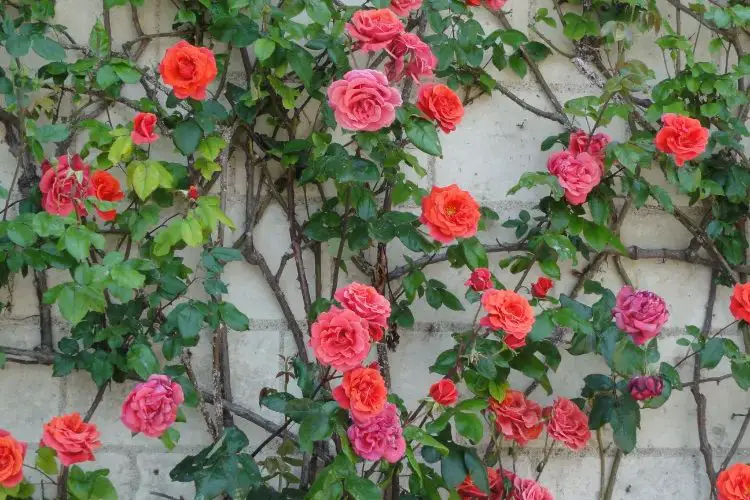
Climbing roses, unlike ivy, need support to thrive against a wall. Here’s how to guide and secure your climbing rose effectively.
When and How to Train a Rose Bush Against a Wall?
Climbing roses can be trained using a wooden trellis or stainless steel wires attached horizontally to the wall. Here’s what you’ll need:
- Stainless steel wire
- Screw pins with dowels
- Cable ties
- Turnbuckles with hooks
- Sealing paste
- Flexible ties with plastic or foam sheath
Start training the rose bush at planting. Secure support that can handle the mature plant’s weight and annual growth cycles. Prune repeat-flowering roses at the end of winter and non-repeat-flowering ones just after blooming. If near walkways, manage vigorous, drooping branches to prevent injuries.
How to Fix the Bracket on the Wall?
Follow these steps to install horizontal support cables securely:
- Use a laser level to mark heights for steel wires (first wire 40 cm from ground, subsequent wires every 30 cm).
- Drill, dust holes, apply sealing paste, insert dowels, let dry.
- Screw eyebolts into dowels, attach cables, and use cable clamps and tensioners.
- Ensure cables don’t touch the wall to allow airflow behind the rose bush.
How to Train a Rose Bush Against a Wall
Prepare your rose bush for optimal growth:
- Remove dead or damaged branches to prevent disease.
- Arch vigorous branches horizontally (called “carpenters”) to encourage even growth and flowering.
- Secure carpenters to steel wires with flexible ties, ensuring they aren’t too tight.
- Fan out branches evenly and prune secondary branches above the second bud to promote uniform flowering.
By following these steps, you’ll create a beautifully trained climbing rose bush that enhances your wall with abundant, well-distributed blooms.