Bougainvillea is a stunning and vibrant flowering plant that adds a pop of color to any garden or landscape. With its striking flowers and hardiness, it’s a favorite for many gardeners. One effective way to propagate bougainvillea plants is through air layering, a technique that allows you to grow a new plant from a healthy stem while it’s still attached to the parent plant. In this article, we’ll explain how to easily air layer bougainvillea to produce beautiful new plants.
What is Air Layering?
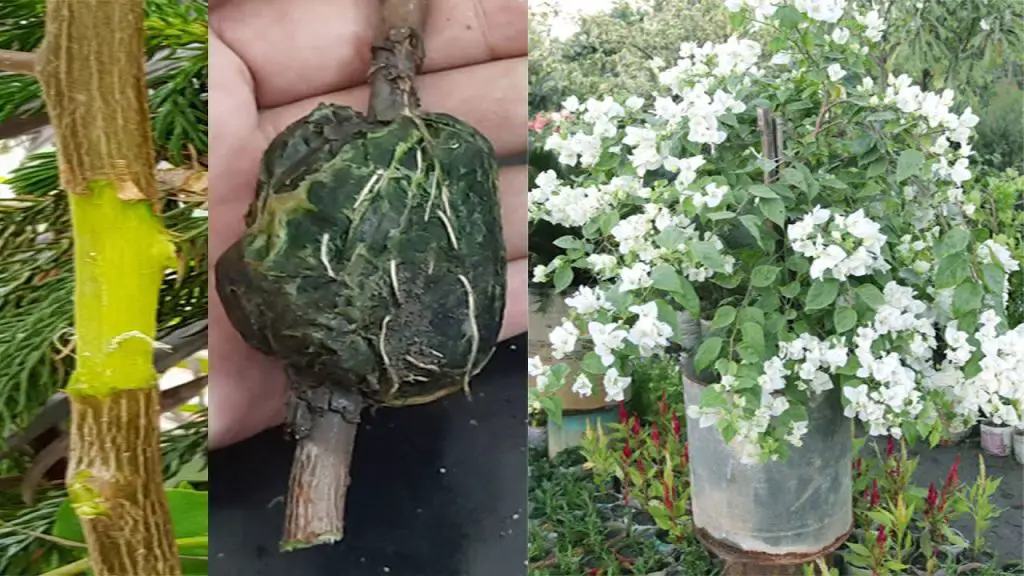
Air layering is a propagation method where you encourage a section of a stem to develop roots while it is still connected to the parent plant. Once the roots are well-formed, you can separate the rooted stem from the mother plant and transplant it into a new pot or garden area. This method works especially well for bougainvillea, as it allows for the development of a new plant without requiring the entire stem to be cut off.
Why Air Layer Bougainvillea?
Air layering is a great way to propagate bougainvillea for several reasons:
- Faster rooting: Since the stem remains attached to the parent plant, the cutting can still get nutrients and water while it develops roots, leading to faster root formation.
- Higher success rate: Air layering has a higher success rate compared to other propagation methods, such as cuttings.
- Stronger plants: The new plant benefits from a stronger root system, making it more resilient and better able to survive after transplanting.
Steps to Air Layer Bougainvillea
Follow these simple steps to successfully air layer your bougainvillea plant:
Step 1: Select a Healthy Stem
- Choose a healthy, mature stem that is at least a few inches long and free of disease or damage. Select a stem that is flexible but not too young, as older stems tend to have better rooting potential.
- Ideally, the stem should be around 1-2 years old for best results.
Step 2: Prepare the Stem for Layering
- Use a sterilized knife or pruning shears to make an upward cut about 12-18 inches from the tip of the stem. Make sure the cut goes about one-third of the way through the stem.
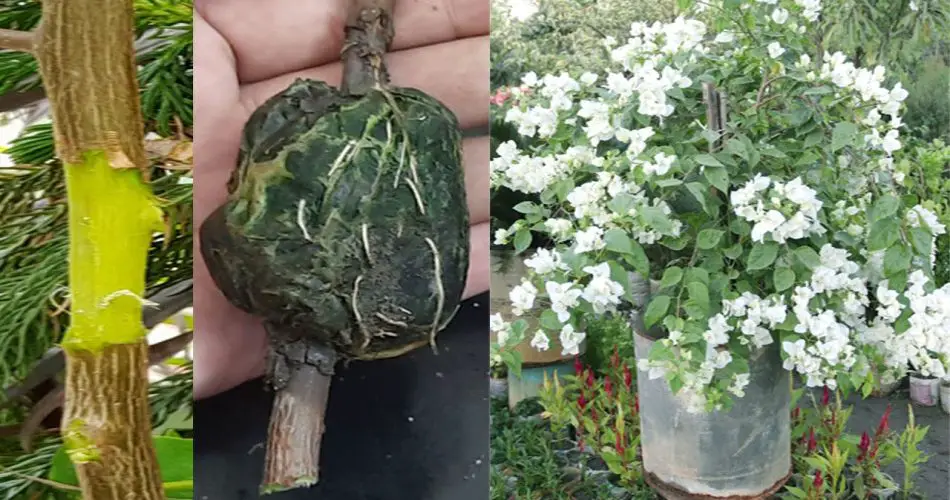
- Gently peel back the bark around the cut, creating a small area where roots can develop. You can also make small notches in the stem to expose the inner tissue, which will encourage root growth.
Step 3: Apply Rooting Hormone
- To increase the chances of successful root formation, apply rooting hormone to the exposed section of the stem. This helps stimulate root growth and accelerates the process.
Step 4: Wrap the Area with Moisture-Retaining Material
- Take a small handful of moist sphagnum moss and wrap it around the exposed section of the stem. Sphagnum moss is ideal for air layering because it retains moisture and allows the roots to grow properly.
- Wrap the moss with plastic wrap or a plastic bag to keep it in place and retain moisture. Secure the ends of the plastic with twist ties or string to ensure the moss stays moist but not soggy.
Step 5: Maintain Moisture and Monitor Growth
- Keep the moss moist by regularly checking and lightly spraying it with water. Ensure that it doesn’t dry out, as the cutting needs consistent moisture to root successfully.
- After about 4-6 weeks, you should start seeing roots forming inside the moss. Gently press on the moss to check for root development. Once the roots are well-established and fill the moss, the cutting is ready to be removed.
Step 6: Separate and Transplant
- Once the roots are established, carefully cut the stem below the newly rooted area.
- Remove the plastic wrap and moss from the stem, being careful not to damage the newly formed roots.
- Plant the rooted cutting in a pot with well-draining soil or directly in your garden, ensuring that the roots are gently covered with soil.
- Water the new plant thoroughly and place it in a spot with bright, indirect sunlight for the best growth.
Tips for Successful Air Layering
- Ensure that the parent plant is healthy and actively growing. It’s best to air layer bougainvillea during the growing season, typically in spring or early summer.
- Choose a non-flowering stem to increase the chances of successful root development.
- After transplanting the new plant, allow it to establish roots before exposing it to full sunlight or strong winds.
Conclusion
Air layering is an excellent method to propagate bougainvillea, and it can be done with minimal effort and great results. By following these simple steps, you’ll be able to grow a new bougainvillea plant that is ready to bloom and thrive in your garden. With a little patience and care, you’ll enjoy the beauty of your bougainvillea for many years to come! 🌸