Lemon trees are a popular choice for home gardeners due to their fragrant blossoms, tangy fruit, and glossy green leaves. While growing lemon trees from seeds is an option, cuttings are a more reliable method for producing fruit-bearing trees with the same desirable traits as the parent plant. One of the most effective ways to propagate a lemon tree from a cutting is by using Aloe Vera gel. Aloe Vera is a natural rooting agent that encourages root growth, boosts success rates, and reduces the chances of fungal infections. Here’s a comprehensive guide on how to grow a lemon plant cutting using Aloe Vera gel.
Why Use Aloe Vera Gel for Rooting Lemon Cuttings?
Aloe Vera is widely recognized for its healing properties, but it’s also an excellent natural rooting hormone for plants. It contains auxins, which stimulate root development, and enzymes that help prevent infection and promote overall plant health. Aloe Vera’s antiseptic properties protect the cutting from harmful pathogens, increasing the chances of successful rooting and minimizing the need for synthetic rooting hormones.
Using Aloe Vera gel to root lemon cuttings is a simple, chemical-free, and cost-effective method for propagating your lemon tree. This method can improve rooting success, speed up the propagation process, and help the cutting establish a healthy root system.
Materials Needed:
- Healthy Lemon Cutting: A 6-8 inch cutting from a mature lemon tree.
- Aloe Vera Gel: Fresh Aloe Vera gel from a plant or organic store-bought gel.
- Sharp Pruning Shears: To make clean cuts.
- Rooting Medium: A well-draining soil mix, such as perlite, coconut coir, and sand.
- Plastic Bag or Greenhouse Dome: To maintain humidity around the cutting.
- Small Pot: To plant the rooted cutting.
Step-by-Step Guide to Growing Lemon Plant Cutting Using Aloe Vera Gel
- Select and Prepare the Cutting
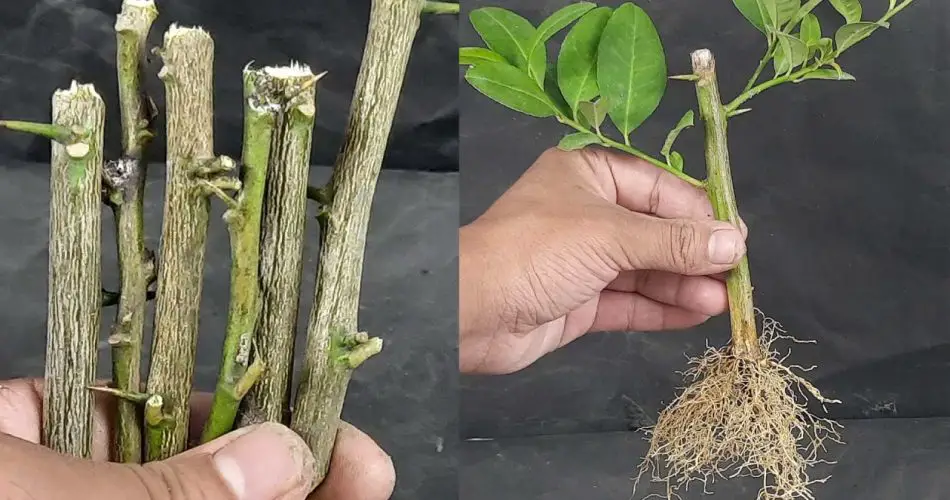
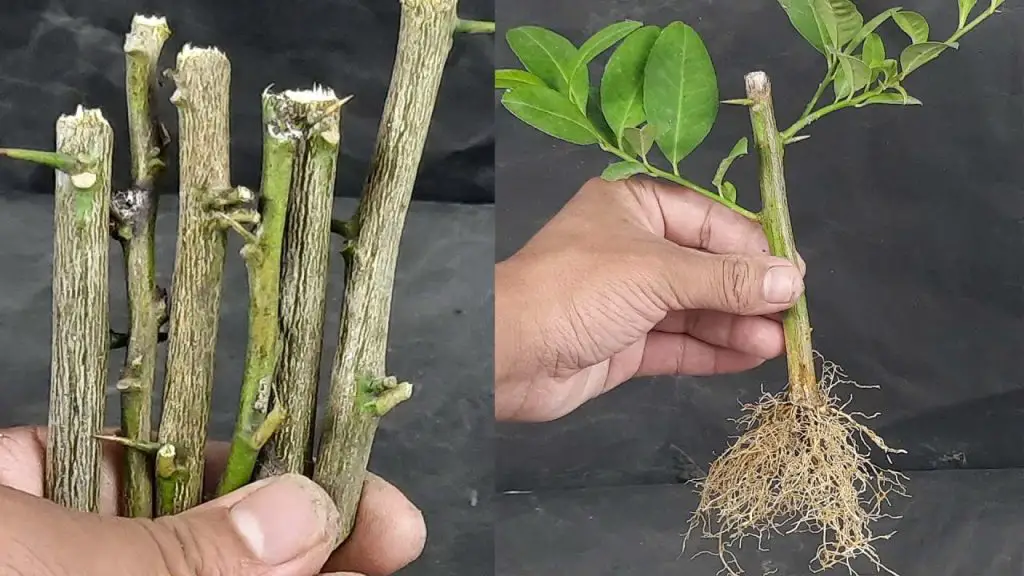
Begin by selecting a healthy cutting from a mature lemon tree. Choose a semi-woody stem (not too young and tender, but not too old and hard). The cutting should be about 6-8 inches long with at least one leaf node (the point where leaves sprout). Use sharp pruning shears to make a clean cut just below a node. Remove any leaves or thorns from the bottom half of the cutting, leaving a few leaves at the top. - Prepare Aloe Vera Gel
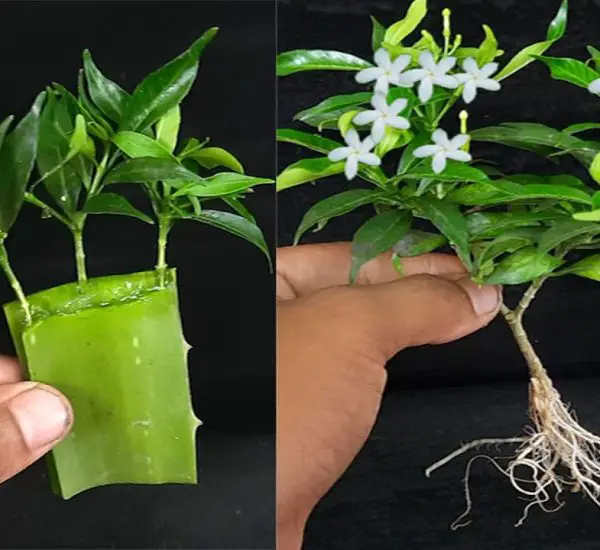
If using fresh Aloe Vera gel, cut open an Aloe Vera leaf and scoop out the gel. Alternatively, you can use store-bought organic Aloe Vera gel. Ensure that the gel is pure and free from preservatives or additives. Aloe Vera gel should be thick and fresh for the best results. - Coat the Cutting with Aloe Vera Gel
Dip the cut end of the lemon cutting into the Aloe Vera gel. Coat the bottom of the cutting thoroughly with the gel, making sure it covers the cut surface. Aloe Vera acts as a natural rooting hormone, encouraging the cutting to develop strong and healthy roots. - Plant the Cutting in a Rooting Medium
Prepare a well-draining potting mix. A good mixture for lemon cuttings includes perlite, coconut coir, and a small amount of sand. Fill a small pot with this mix, and make a small hole in the center of the soil. Insert the Aloe Vera-coated cutting into the hole, making sure the cut end is buried deep enough to hold it in place but not so deep that it risks rotting. Gently firm the soil around the base of the cutting. - Water the Cutting
After planting the cutting, water it gently to settle the soil. Make sure the soil is moist, but avoid overwatering as this can cause the cutting to rot. Aloe Vera helps protect against overwatering by promoting healthy root growth, but it’s important to maintain the right balance of moisture in the soil. - Create a Humid Environment
Lemon cuttings need a humid environment to root successfully. Cover the pot with a plastic bag or a greenhouse dome to retain moisture and create humidity around the cutting. Be sure to leave small openings to allow for air circulation, as excessive moisture buildup can encourage mold growth. Mist the cutting lightly if necessary to maintain humidity levels. - Place in a Warm, Bright Location
For optimal rooting, place the pot in a warm area with indirect sunlight. The ideal temperature for rooting lemon cuttings is between 70°F-80°F (21°C-27°C). Avoid placing the cutting in direct sunlight, as this can scorch the leaves and dry out the cutting. A bright location will help stimulate the development of roots and new growth. - Wait for Root Development
In about 3-6 weeks, the cutting should begin to develop roots. To check for root growth, gently tug on the cutting—if there is resistance, it means the roots are established. You can also carefully remove the cutting from the pot to inspect the roots. Once the cutting has a robust root system, it’s ready to be transplanted. - Transplant the Rooted Cutting
Once the lemon cutting has well-developed roots, you can transplant it into a larger pot or directly into your garden. If you’re planting it in the garden, choose a location with full sun and well-draining soil, as lemon trees thrive in sunny conditions. Continue to water the plant regularly and provide nutrients to encourage healthy growth.
Tips for Successful Lemon Cutting Propagation
- Use Semi-Woody Cuttings: Select a semi-woody cutting (not too young and soft, but not too old and hard) for the best chance of success.
- Maintain Humidity: Cover the pot with a plastic bag or greenhouse dome to create a humid environment for the cutting.
- Warm Temperature: Ensure the cutting is placed in a warm spot with indirect sunlight for optimal root development.
- Be Patient: Lemon cuttings typically take 3-6 weeks to root, so give them time to establish a healthy root system.
Conclusion
Using Aloe Vera gel to grow a lemon plant cutting is an easy, natural, and highly effective method for propagating lemon trees. Aloe Vera’s natural rooting compounds and antiseptic properties help ensure that your cutting has the best possible chance of rooting and thriving. By following these steps, you can propagate a healthy, fruit-bearing lemon tree that will provide you with delicious, homegrown lemons in the future. Whether you’re a beginner or an experienced gardener, this simple method will give you the confidence to propagate your own lemon tree successfully.