Coconuts, with their robust shells and fibrous interiors, are not just delicious tropical treats but also versatile materials for crafting eco-friendly flower pots. By repurposing dried coconut shells, you can create unique and sustainable planters that add a touch of natural beauty to your home or garden. Here are three inventive methods to transform dried coconut into functional and charming flower pots:
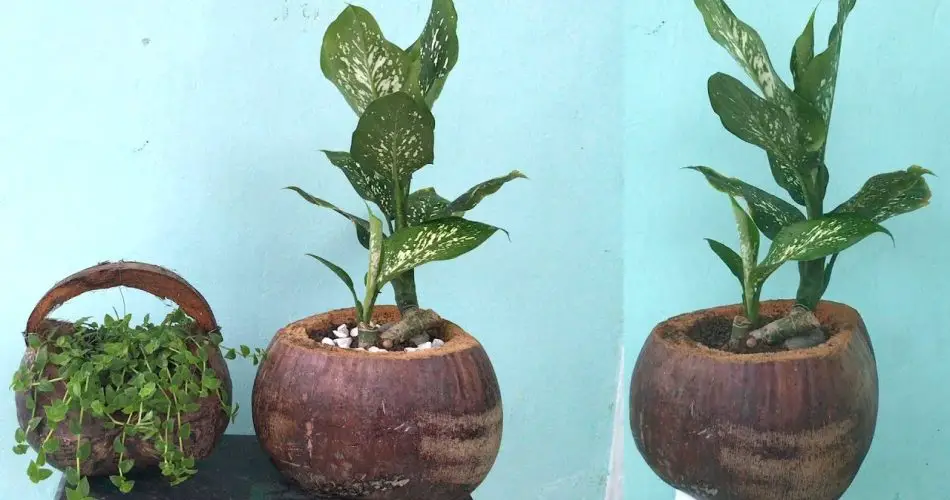
1. Simple Coconut Shell Planters
Transforming a dried coconut shell into a simple flower pot is both straightforward and environmentally friendly. Here’s how to do it:
- Selecting and Preparing the Coconut: Choose a dried coconut shell that is clean and intact. Ensure it is thoroughly dried to prevent mold or decay. Clean the shell inside and out to remove any remaining coconut meat or husk fibers.
- Drainage Holes: Using a drill with a small bit, carefully drill one or more drainage holes in the bottom of the coconut shell. This step is crucial to ensure proper drainage and prevent waterlogging, which can lead to root rot in plants.
- Adding Soil and Planting: Fill the coconut shell with well-draining potting soil suitable for your chosen plants. Plant your flowers or herbs according to their specific care requirements. Place the coconut shell planter in a sunny spot and water as needed.
- Decorative Touches: Enhance the aesthetic appeal of your coconut shell planter by decorating the outer surface with natural materials like twine, shells, or paint. This personal touch can complement your home decor or garden theme.
2. Hanging Coconut Shell Planters
Create charming hanging planters from coconut shells to add a touch of tropical flair to your indoor or outdoor space:
- Preparing the Coconut: Similar to the simple coconut shell planter, select a dried coconut shell and clean it thoroughly. Drill two or more holes near the top edge of the shell for attaching hanging ropes or chains.
- Hanging Mechanism: Thread sturdy ropes, chains, or macramé hangers through the drilled holes to create a secure hanging mechanism for your coconut shell planter.
- Planting and Care: Fill the shell with potting soil and plant your favorite trailing plants or flowers. Ensure the coconut shell planter receives adequate sunlight or shade as per the plant’s requirements. Water regularly to maintain optimal soil moisture.
- Placement: Hang your coconut shell planters in locations that provide appropriate light levels and complement your overall design aesthetic. These hanging planters are ideal for balconies, porches, or indoor spaces with limited floor space.
3. Coconut Shell Succulent Garden
Turn a cluster of dried coconut shells into a miniature succulent garden, perfect for tabletop or windowsill displays:
- Grouping and Arrangement: Arrange several dried coconut shells in a visually pleasing cluster. Ensure each shell is cleaned and prepared as described earlier.
- Plant Selection: Choose a variety of small succulents or cacti that thrive in containers and require minimal watering. Select plants with contrasting colors and textures to create an eye-catching display.
- Planting and Design: Fill each coconut shell with well-draining succulent potting mix. Plant your succulents, leaving enough space between them to accommodate growth. Consider adding decorative elements like small stones or driftwood pieces to enhance the garden’s aesthetic appeal.
- Care and Maintenance: Place your coconut shell succulent garden in a location with bright, indirect sunlight. Water sparingly, allowing the soil to dry out between waterings to prevent root rot. Rotate the garden occasionally to ensure even light exposure for all plants.
Conclusion
Repurposing dried coconut shells into flower pots offers a creative and sustainable way to incorporate natural elements into your gardening and home decor. Whether you opt for simple planters, hanging designs, or miniature succulent gardens, these coconut shell creations not only add aesthetic value but also promote eco-friendly practices by reducing waste. Embrace your creativity and enjoy the beauty of nature with these inventive ways to craft flower pots from dried coconut shells.