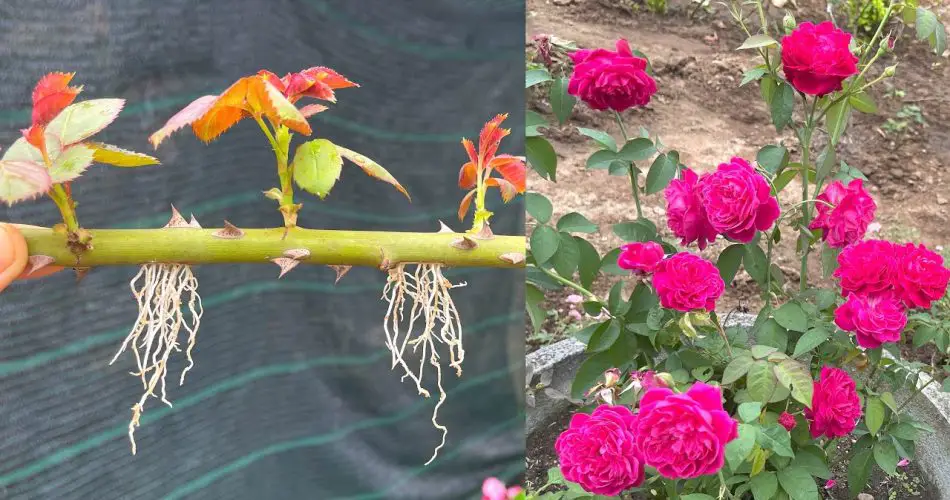
Roses, revered for their elegance and fragrance, hold a special place in the hearts of gardeners worldwide. While traditional methods of growing roses from seeds or cuttings are well-known, an alternative approach involves planting rose branches directly into the soil. This method offers a unique way to propagate roses while ensuring robust growth and abundant blooms.
Why Rose Branches?
Planting rose branches is a practical way to propagate new rose plants while utilizing existing mature branches from healthy rose bushes. This method bypasses the need for seeds or root cuttings, making it an accessible option for gardeners of all skill levels.
Step-by-Step Guide:
- Selecting Healthy Branches: Choose mature, disease-free branches from a well-established rose plant. Opt for branches that are firm, with healthy foliage and preferably some existing buds.
- Preparing the Branches: Using sharp, clean pruners, cut the selected branches from the parent plant. Each branch should ideally be around 8-12 inches long, with several nodes along its length.
- Trimming and Preparing the Branches: Remove any flowers or buds from the lower portion of the branches. Trim the bottom end of each branch at a 45-degree angle just below a node to encourage root growth.
- Planting the Branches: Choose a suitable location in your garden with well-draining soil and ample sunlight. Dig a hole deep enough to accommodate the branch, ensuring the node area is buried beneath the soil. Plant multiple branches at least a foot apart to allow room for growth.
- Watering and Mulching: After planting, water the soil thoroughly to settle it around the branches. Apply a layer of mulch around the base of each planted branch to conserve moisture and suppress weed growth.
- Monitoring and Care: Regularly monitor the planted branches for signs of growth, including new foliage and root development. Ensure the soil remains consistently moist but not waterlogged. Prune away any dead or diseased foliage to promote healthy growth.
- Establishment and Growth: With proper care and attention, the planted branches should begin to establish roots within a few weeks to months, depending on environmental conditions. Once roots are well-established, the branches will gradually develop into flourishing rose bushes, ready to grace your garden with their beauty.
Conclusion:
Planting rose branches offers a rewarding and straightforward method of propagating roses, resulting in healthy, vibrant plants with minimal effort. By following these steps and providing the necessary care, you can enjoy a bountiful display of blooms from your newly established rose bushes. So, why not branch out and give this innovative technique a try in your garden?