Lemon plants are a wonderful addition to any garden, providing fresh, tangy fruits while adding a refreshing citrus scent. However, like all plants, they can be vulnerable to pests and fungal diseases that can harm their growth and fruit production. The good news is that you don’t have to rely on harsh chemicals to protect your lemon plant. Instead, you can use natural, homemade remedies such as baking soda and turmeric powder to keep your lemon tree healthy and thriving. These organic pesticides and fungicides are not only safe for your plant but also eco-friendly and easy to make.
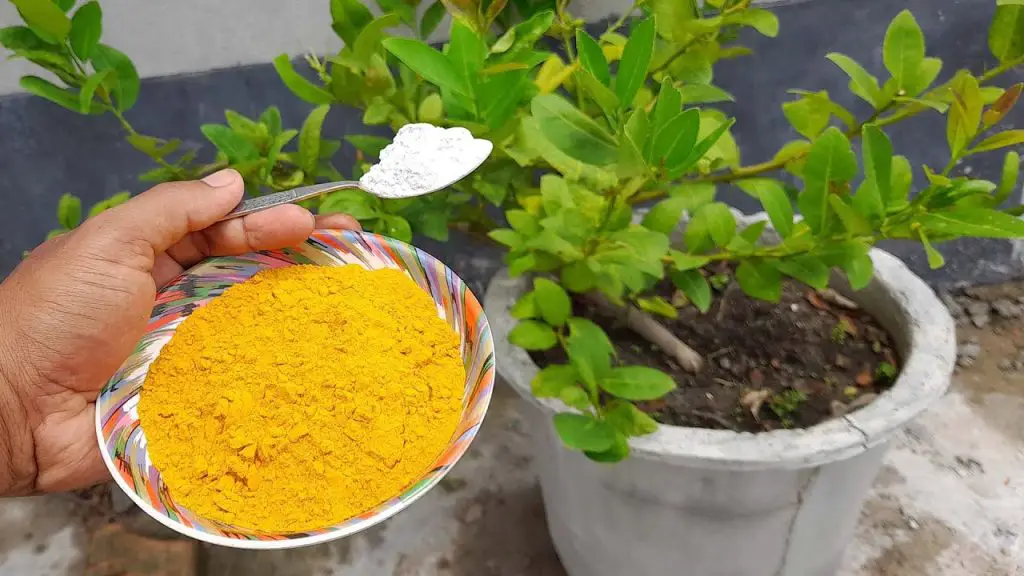
Why Choose Homemade Organic Pesticides and Fungicides?
- Safe for plants: Unlike commercial chemicals, organic remedies do not harm your plants or the environment.
- Eco-friendly: These homemade solutions are non-toxic and won’t pollute the soil or water.
- Cost-effective: Ingredients like baking soda and turmeric powder are affordable and easily available.
- Simple to make: You can prepare these solutions in no time and apply them with minimal effort.
In this article, we will guide you on how to create two effective homemade pesticides and fungicides using common household ingredients like baking soda and turmeric powder.
1. Baking Soda Solution for Lemon Plants
Baking soda (sodium bicarbonate) is a natural fungicide and pesticide that can help protect your lemon plant from fungal diseases such as powdery mildew and downy mildew. It also works as a mild pesticide, helping to ward off pests like aphids and whiteflies.
How to Make Baking Soda Fungicide and Pesticide:
Ingredients:
- 1 tablespoon of baking soda
- 1 gallon of water
- A few drops of liquid dish soap (optional, to help the solution stick to leaves)
Instructions:
- In a clean spray bottle or container, add 1 tablespoon of baking soda to 1 gallon of water.
- Stir well to dissolve the baking soda completely in the water.
- Optionally, add a few drops of liquid dish soap. This will act as a wetting agent, helping the solution stick to the leaves of the plant.
- Shake the bottle gently to mix the solution, then spray it onto the leaves, stems, and soil of your lemon plant.
How it Works:
- Baking soda creates an alkaline environment on the plant’s surface that prevents the growth of fungal spores.
- It also helps to neutralize the acidic environment that pests such as aphids and other insects thrive in.
When to Apply:
- Apply the baking soda solution once a week to prevent fungal infections.
- Reapply after heavy rain or watering, as the solution may wash off.
- Always spray in the morning or evening to avoid the sun’s heat, which could cause leaf burn.
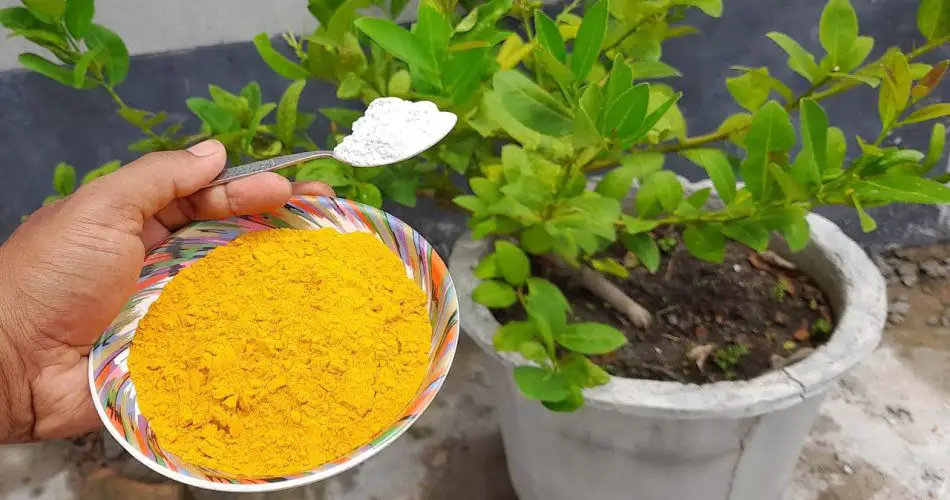
2. Turmeric Powder Solution for Lemon Plants
Turmeric powder, known for its antifungal and antibacterial properties, is another powerful, natural solution for keeping your lemon tree healthy. It can help fight fungal infections like root rot, blight, and other common fungal diseases. Turmeric also acts as a natural insect repellent, helping to protect your plant from pests.
How to Make Turmeric Fungicide and Pesticide:
Ingredients:
- 1 tablespoon of turmeric powder
- 1 gallon of water
- A few drops of liquid dish soap (optional)
Instructions:
- In a spray bottle or container, add 1 tablespoon of turmeric powder to 1 gallon of water.
- Stir the mixture well to dissolve the turmeric powder into the water.
- Optionally, add a few drops of liquid dish soap to help the solution stick to your plant’s leaves.
- Shake the bottle gently to mix the solution, then spray it evenly on the leaves, stems, and surrounding soil.
How it Works:
- Turmeric powder contains curcumin, which has powerful antifungal properties that help prevent fungal diseases.
- It acts as a natural pesticide, repelling insects that may be harming your lemon plant.
- Turmeric also works as a soil sterilizer, reducing the chances of soil-borne diseases affecting your plant.
When to Apply:
- Apply the turmeric solution once every 10-14 days or after noticing the presence of pests or fungal diseases.
- Reapply after rainfall or heavy watering.
Why These Homemade Remedies Work
Both baking soda and turmeric powder are effective at combating pests and fungal diseases because they create an inhospitable environment for harmful organisms while being completely safe for your plants. They are not toxic to beneficial insects like bees and ladybugs, which are essential for pollination and pest control.
In addition, these natural solutions are affordable, easy to use, and non-toxic, making them a great choice for gardeners looking for a more sustainable way to protect their lemon trees.
Conclusion: Protect Your Lemon Plant Naturally
By using baking soda and turmeric powder as natural pesticides and fungicides, you can keep your lemon plants healthy and vibrant throughout the growing season. These simple and cost-effective solutions will help prevent pests and fungal diseases without harming the environment or your plants. With regular application and proper care, your lemon tree will thrive and reward you with a bountiful harvest of fresh, delicious lemons.
So, the next time your lemon plant faces pest or fungal issues, try these homemade organic remedies for a safe, effective solution that is good for your plant and the planet!