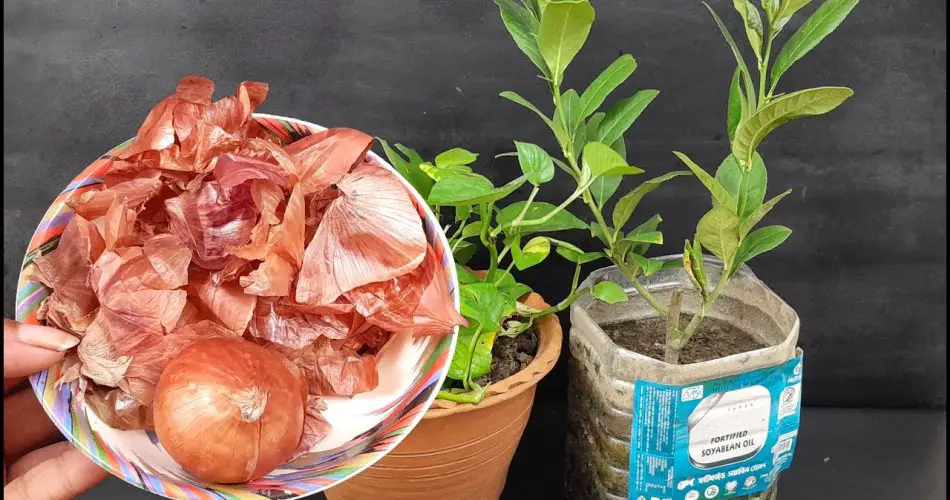
Onion peels, often discarded as kitchen waste, are actually a valuable natural fertilizer for your garden plants. They are packed with essential nutrients that can greatly benefit plant growth. In this article, we’ll explore the benefits of using onion peels for your plants and how to make the most out of this simple and eco-friendly fertilizer.
Why Onion Peels are Beneficial for Plants
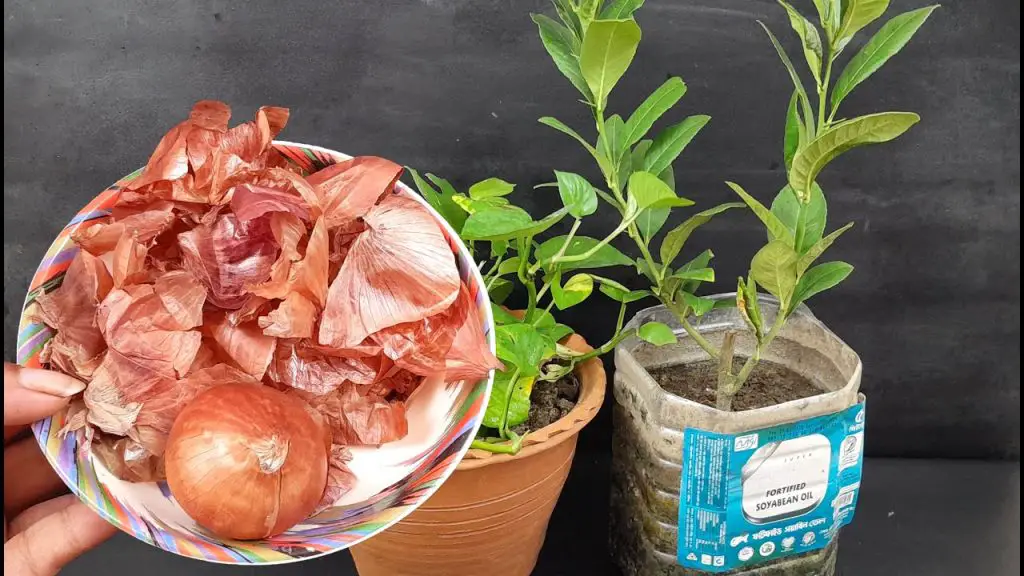
Onion peels are an excellent source of important nutrients such as:
- Calcium
- Potassium
- Magnesium
- Iron
- Copper
These minerals and elements are crucial for the healthy growth of plants, contributing to strong roots, vibrant leaves, and overall improved plant health. Using onion peels as a natural fertilizer helps enrich the soil with these nutrients, promoting a better growing environment.
How to Use Onion Peels for Plants
Step 1: Collect the Onion Skins
Start by collecting the peels of onions. You can easily save them after chopping or using onions in your kitchen. Set aside the outer skins, as they are the most nutrient-rich part.
Step 2: Dry the Onion Skins
After collecting the onion skins, leave them out to dry for about 1 day. This ensures they’re free of excess moisture, which makes them easier to use in your garden. Drying also helps concentrate the nutrients in the peels.
Step 3: Apply to Plants
There are different ways to use the dried onion peels in your garden:
- As mulch: Simply spread the dried peels around the base of your plants to help retain moisture in the soil and improve its texture over time.
- As compost: Add the dried peels to your compost pile to enhance the nutrient content and speed up decomposition.
- As a liquid fertilizer: Soak the dried onion skins in water for a few days to create a nutrient-rich liquid that can be used to water your plants. This provides your plants with a slow release of essential nutrients.
Benefits of Using Onion Peels as Fertilizer
- Improves Soil Quality: The minerals in onion peels help improve soil fertility, making it richer and better for growing healthy plants.
- Promotes Plant Health: The calcium, potassium, and iron in onion peels aid in root development, flower blooming, and strong, green foliage.
- Environmentally Friendly: Using onion peels is a sustainable way to reduce waste while helping your garden grow. It’s a great example of recycling and reusing kitchen scraps to benefit the environment.
- Cost-Effective: Onion peels provide a low-cost alternative to store-bought fertilizers. Instead of throwing them away, you can turn them into a valuable resource for your plants.
Conclusion
Incorporating onion peels into your gardening routine is a simple yet effective way to provide your plants with natural nutrients. By utilizing this kitchen waste as a fertilizer, you not only help your plants thrive but also contribute to a more sustainable gardening practice. Whether used as mulch, compost, or liquid fertilizer, onion peels can help improve soil health and promote the growth of vibrant, healthy plants. 🌿✨
Give it a try and watch your garden flourish with this eco-friendly fertilizer!